
For industrial control PCB assembly, component sourcing should begin with a manufacturability and availability review of the BOM—not simply with purchasing the listed part numbers. The PCBA supplier should verify manufacturer part numbers, package and specification requirements, stock availability, lifecycle status, approved alternatives, and any components that may affect assembly or testing.
For BOM sourcing and PCB assembly, the key is to keep purchasing decisions tied to the actual build. A component may be available but still be unsuitable because of package differences, moisture sensitivity, lead time, traceability requirements, or an unapproved substitution. These issues should be identified before procurement rather than after parts arrive for production.
This is particularly important for industrial control PCB assembly, where a BOM may combine controllers, drivers, relays, power devices, connectors, sensors, and communication components with different electrical, thermal, lifecycle, and availability constraints. A sourcing decision therefore needs to consider not only whether a part can be purchased, but whether it remains suitable for the approved design and expected production lifecycle.
If your BOM is still being prepared, see our guide on how to prepare a PCB BOM for assembly. For projects ready for purchasing, our components procurement service covers sourcing and supply coordination as part of the PCBA process.
Quick Leads-PCBA
1. Review the BOM Before Component Sourcing
A BOM should be checked before purchase orders are placed. For an industrial control PCBA, the review should confirm that each line item contains enough information to source the intended component without relying on assumptions.
At minimum, check:
- Manufacturer and manufacturer part number (MPN) – avoid sourcing from descriptions alone.
- Package and footprint – confirm that the ordered package matches the PCB land pattern and assembly process.
- Electrical specifications – verify voltage, current, tolerance, temperature rating, and other design-critical parameters where applicable.
- Quantity and reference designators – make sure the required quantity agrees with the assembly quantity and PCB design.
- Lifecycle and availability – identify parts that are obsolete, NRND, allocation-controlled, or difficult to obtain.
- Approved alternatives – record customer-approved substitutes rather than allowing uncontrolled replacements during purchasing.
- Special handling requirements – flag moisture-sensitive devices, programmed ICs, customer-supplied parts, or components requiring specific storage or traceability.
The BOM should also be checked against the PCB assembly files. A valid MPN can still cause a production problem if its package does not match the footprint used in the design. Finding that mismatch before PCB component sourcing avoids unnecessary purchasing, SMT setup, and first-article issues.
Once the BOM is confirmed, sourcing can move to availability, supplier selection, and procurement risk. Parts with uncertain availability or lifecycle status should be identified before purchasing begins, especially when they could affect the production schedule.
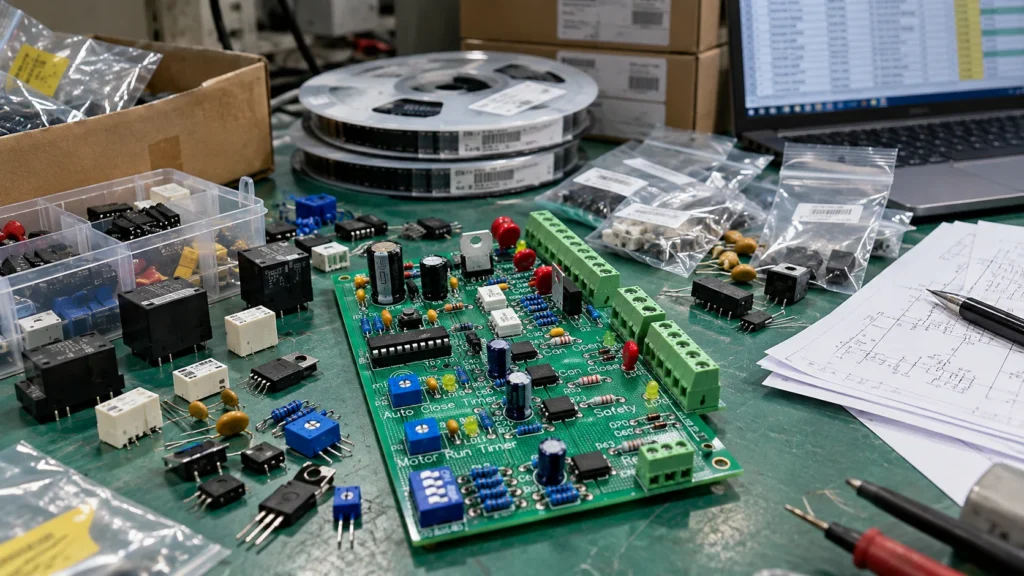
2. Check Availability, Lead Time, and Lifecycle Risk
A component that is listed in a BOM is not necessarily available in the quantity and timeframe required for production. Before purchasing, check current stock, expected replenishment dates, manufacturer lead times, minimum order quantities, and lifecycle status for parts that could affect the build schedule.
For electronic component sourcing, pay particular attention to ICs, power devices, relays, connectors, and other parts that may have limited availability or long replenishment cycles. Stock shown by a distributor should also be checked against the quantity required for the complete production run rather than a single PCB.
If a component is obsolete, NRND, or unavailable within the required lead time, identify the issue before placing the order. The next step may be to wait for replenishment, use customer-supplied stock, locate the specified MPN through another qualified source, or evaluate an alternative component with customer approval.
For industrial control products expected to remain in production or service for years, lifecycle risk deserves particular attention. A component that was readily available during prototyping may become constrained, NRND, or obsolete during later production or maintenance builds. Availability should therefore be reviewed again before each purchasing cycle rather than assumed from the previous order.
3. Define Approved Alternatives Before Purchasing
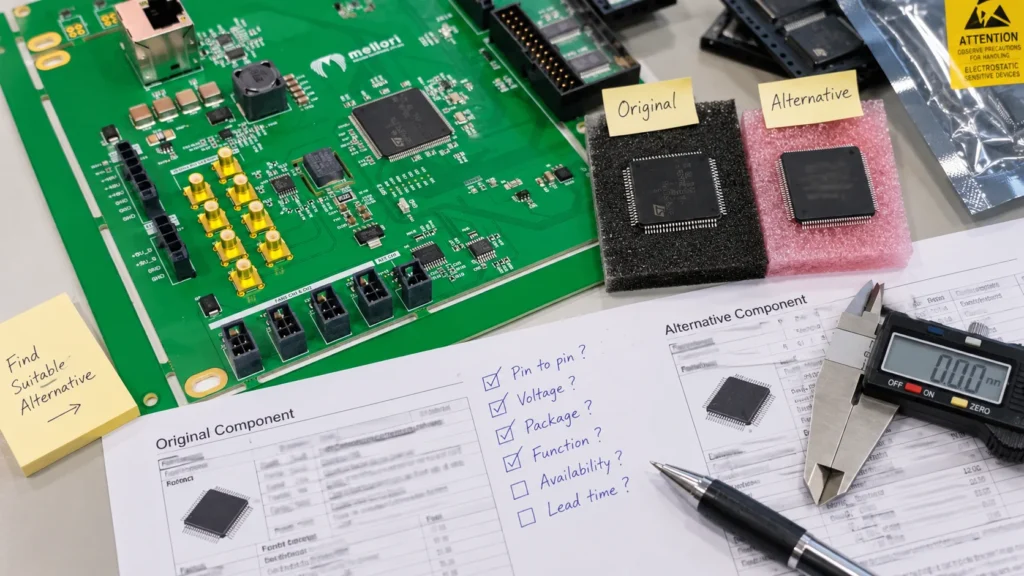
When a specified component is unavailable, a substitute should not be purchased simply because it has the same package or a similar description. The alternative needs to be checked against the requirements that matter to the circuit and the end application.
Depending on the component, compare parameters such as voltage and current ratings, tolerance, power rating, temperature range, package, pinout, switching characteristics, and manufacturer specifications. For ICs and other function-specific devices, firmware compatibility or application behavior may also need engineering review.
The approval process should be clear before purchasing begins. A PCB assembly supplier can identify availability problems and propose possible alternatives, but the customer or authorized engineering team should approve substitutions that affect the specified BOM. The approved MPN and revision should then be recorded so purchasing and production are working from the same information.
For industrial control boards, this matters particularly when substitutions affect power regulation, signal paths, communication interfaces, sensing, or control functions. “Equivalent” should describe an engineering decision, not a purchasing assumption.
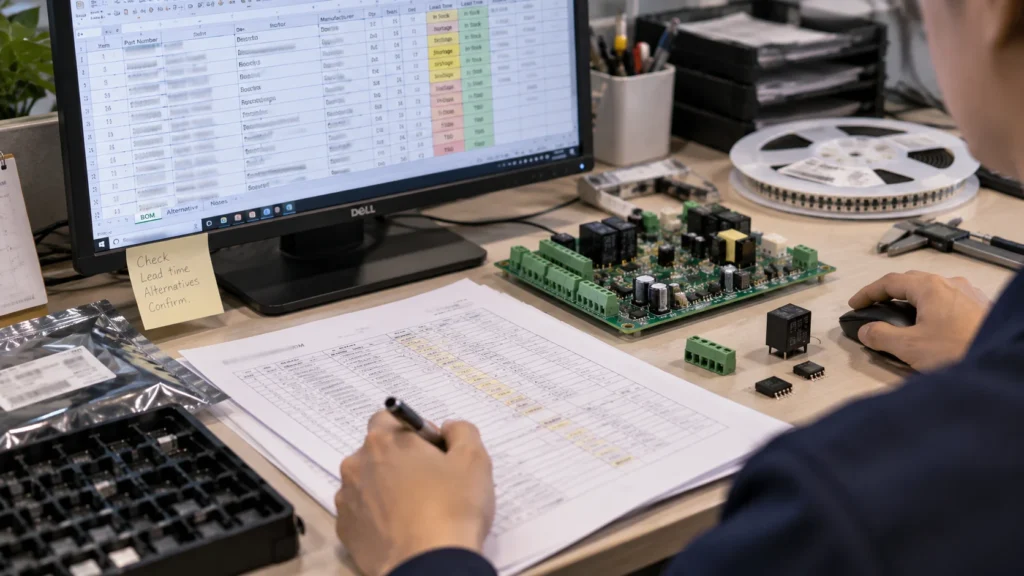
4. Account for Industrial Control Component Requirements
Component sourcing for an industrial control PCBA should reflect the electrical, environmental, and lifecycle requirements of the equipment—not just the footprint and basic part description.
Power and control sections may include MOSFETs, gate drivers, relays, DC/DC converters, protection devices, and high-current connectors. When sourcing or evaluating alternatives for these parts, parameters such as voltage and current ratings, switching characteristics, thermal performance, isolation, contact ratings, and operating temperature may affect whether a component is suitable for the application.
Controllers and communication circuits can introduce different constraints. An MCU, transceiver, sensor interface, or driver may depend on a specific pinout, firmware, communication standard, or electrical behavior, making substitution more difficult even when another device appears similar on paper.
Lifecycle also matters for industrial equipment expected to remain in production or service for years. When possible, identify lifecycle risks early and consider future availability when approving parts for repeat builds.
For this reason, component sourcing for industrial control PCB assembly is not simply a stock-availability exercise; sourcing decisions need to remain consistent with the approved design and intended operating conditions.
5. Choose the Right Component Sourcing Channels
Not every component needs to come through the same purchasing channel. The appropriate source depends on availability, quantity, lead time, traceability requirements, and the level of supply risk acceptable for the project.
For PCB component sourcing, common purchasing channels include:
- Manufacturers and authorized distributors – generally preferred when traceability and manufacturer-backed supply are important.
- Major distributors such as DigiKey and Mouser – useful for prototypes, low-volume builds, and components available in standard distribution stock.
- Established regional or domestic distributors – can provide additional availability and commercial options, particularly when they have recognized manufacturer relationships.
- Independent distributors and spot-market suppliers – may help locate specified parts during shortages, but source verification and inspection requirements should be defined before purchasing.
The lowest component price should not automatically determine the sourcing channel. For an industrial control PCB assembly project, the purchasing decision should also consider whether the source can meet the required documentation, traceability, quantity, and production schedule.
If a part must be sourced outside the preferred supply channel, agree in advance on what source information or inspection is required before the component is accepted for assembly.
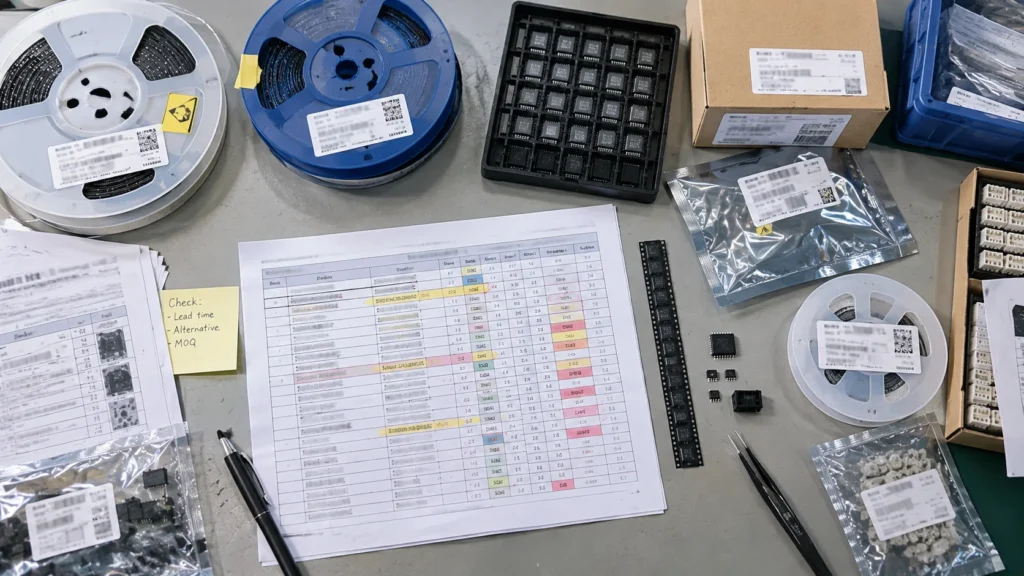
6. Define Traceability and Incoming Component Controls
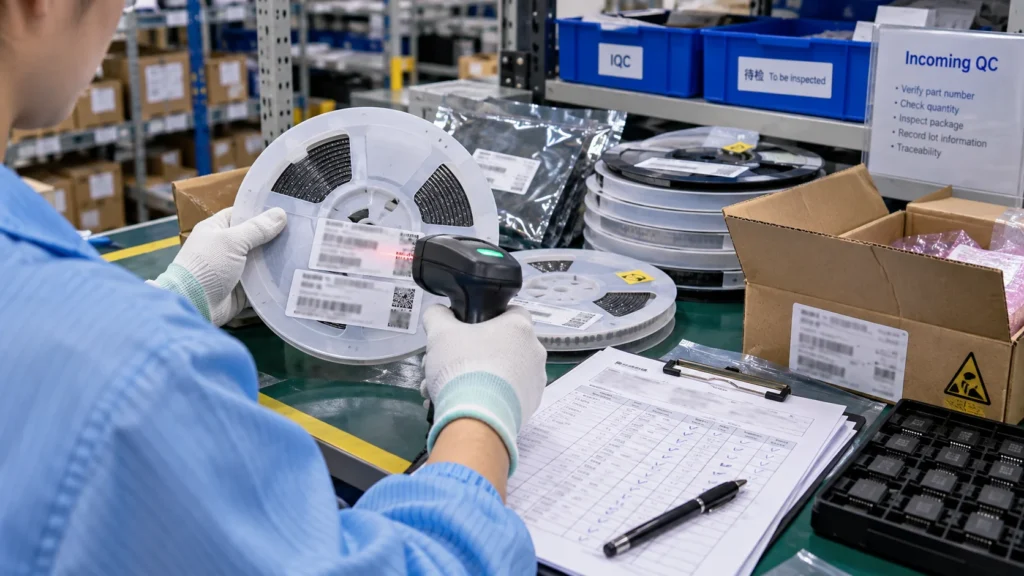
Traceability requirements should be defined before components are purchased, especially when the project requires records beyond the basic manufacturer part number. Depending on the application, buyers may need supplier information, manufacturer labels, lot or date codes, certificates, or other purchasing records retained with the production batch.
Incoming controls should match the sourcing risk and the component involved. At minimum, received parts should be checked against the purchase information for MPN, quantity, package, labeling, and visible condition. Additional verification may be appropriate for moisture-sensitive devices, expensive ICs, parts obtained outside preferred distribution channels, or components with project-specific traceability requirements.
Documentation requirements also need to be practical. Not every industrial control PCBA requires component-level traceability for every resistor and capacitor. Define which parts or records matter to the project before quotation so the PCB assembly supplier can include the required controls in the purchasing and production scope.
If a sourcing issue is discovered during incoming inspection, the affected parts should be held for review rather than released directly to assembly until the discrepancy is resolved.
Need a Reliable PCB Assembly Partner?
Get $100 OFF Your First PCBA Order
sales@unitcircuits.com
✅No MOQ – Prototype to Production ✅PCB Manufacturing + Component Sourcing + Assembly ✅Quality Inspection & Testing | Fast Turnaround
7. Coordinate Component Sourcing With PCB Assembly
Component purchasing should be planned against the actual PCB assembly schedule. Before production is released, confirm that the required PCBs, components, approved alternatives, and customer-supplied parts will be available in the quantities needed for the build.
For BOM sourcing and PCB assembly, this coordination is especially important when one or two long-lead components can hold up an otherwise complete kit. Purchasing teams should identify these constraints early and decide whether to wait for the specified parts, adjust the production schedule, or review an approved alternative before assembly begins.
Production changes also need to flow back into purchasing. If the BOM, PCB revision, assembly quantity, or approved component changes, the sourcing information should be updated before additional material is ordered. This reduces the risk of purchasing parts against an outdated revision.
A turnkey PCB assembly model can simplify this coordination when PCB fabrication, component procurement, assembly, and the agreed inspection or testing scope are managed within the same project. Buyers should still confirm the exact purchasing and production responsibilities before placing the order.
What Should You Provide for a Component Sourcing Quote?
To quote component sourcing accurately, the supplier needs more than a list of component descriptions. Provide a complete BOM together with the purchasing and production requirements that affect the build.
Include:
- BOM with manufacturer part numbers: Include MPNs, quantities, reference designators, package information, and any approved alternatives already defined.
- PCB assembly quantity: State the number of boards required for the current build and, where useful, expected repeat-order quantities.
- Approved alternatives: Clearly identify parts that may be substituted and those that must remain exactly as specified.
- Customer-supplied components: Mark any consigned parts and confirm the quantities you will provide.
- Sourcing restrictions: Identify manufacturer, distributor, date-code, lifecycle, or traceability requirements that must be followed.
- Production schedule: Provide the required delivery timing so long-lead or constrained components can be identified during quotation.
- Special component requirements: Note programmed ICs, moisture-sensitive devices, or other parts requiring specific purchasing, storage, or handling controls.
If the quotation includes PCB fabrication and assembly as well as components, send the relevant Gerber, placement, and assembly files at the same time. This allows sourcing questions to be reviewed against the actual production package rather than as a separate purchasing exercise.
Industrial Control PCBA Component Sourcing FAQs
Can I supply some components while the PCBA manufacturer sources the rest?
Yes. This is commonly handled as a partial-turnkey or consigned sourcing model. The customer can supply selected components while the PCBA manufacturer sources the remaining BOM items. Consigned parts should be clearly identified in the BOM, with quantities and delivery timing confirmed before assembly. It is also useful to agree in advance how shortages, damaged parts, and unused customer-supplied components will be handled.
Where should components for PCB assembly be sourced?
For production builds, manufacturers and authorized distributors are generally preferred when traceability and supply documentation are required. Major distributors can also be practical for prototypes and lower-volume requirements. Independent or spot-market sources may be considered when specified parts are difficult to obtain, but additional source verification or incoming inspection may be necessary before those components are released to assembly.
How should obsolete or EOL components be handled for industrial control PCBAs?
For an industrial control product expected to remain in production or service for years, an EOL notice should trigger a review of remaining demand, available stock, maintenance requirements, and possible replacements. Depending on the situation, the buyer may consider a last-time buy, an approved alternative, or a design revision. A replacement should be technically reviewed and approved before purchasing rather than selected only because stock is available.
Component Sourcing Support for Industrial Control PCBAs
Unit Circuits supports component procurement as part of industrial control PCB assembly projects, including prototypes, low-volume builds, and repeat production. Sourcing can be coordinated with PCB fabrication and assembly using the approved BOM and project requirements.
To review a new project, send your BOM with manufacturer part numbers, required quantity, approved alternatives or sourcing restrictions, and any customer-supplied components. If PCB assembly is also required, include the relevant PCB production files.
Before quotation, BOM availability and sourcing exceptions can be identified for clarification so that purchasing decisions are agreed before components are ordered.
SEND YOUR PCB FILES FOR A QUOTE
sales@unitcircuits.com
✅ Related Industrial PCB Assembly Guides
Quick Turn Turnkey PCB Assembly: Fast Quotes, Faster Prototypes, Lower Risk
Quick turn turnkey PCB assembly for engineers who need fast quotes, reliable component sourcing, controlled
How to Prepare a PCB BOM (Bill of Materials) for PCB Assembly
Learn how to prepare a PCB BOM for assembly that reduces delays, improves sourcing accuracy,
RECENT POSTS
Get Your PCBA Quote in 24 Hours
Low MOQ | Fast Turnaround | One-Stop PCBA
sales@unitcircuits.com
✅ PCB Manufacturing & Assembly
✅ Component Sourcing
✅ Prototype to Production

 Assemble 20 PCBAS for $0