Last Updated: August 11, 2026
When importing PCB assemblies from China, OEM buyers need to understand more than just manufacturing costs. Correct HS code classification affects customs clearance, import duties, shipping documents, and delivery timelines.
This guide explains common PCB assembly HS codes, the difference between bare PCBs and assembled PCBAs, and key considerations for international electronics trade.
Quick Leads
PCB vs PCBA: Understanding HS Code Differences
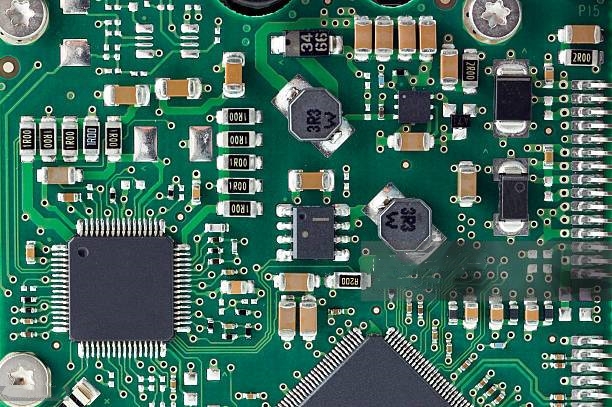
Before importing electronic boards, OEM buyers need to understand the difference between bare PCBs and assembled PCBAs. The HS code classification depends on whether the board contains electronic components and what function the final product performs.
| Product | Contains Components | Typical HS Code | Import Notes |
|---|---|---|---|
| Bare PCB | No | 8534.00.00 | Printed circuit board without components |
| PCBA | Yes | Depends on function | Classification varies by application |
| Control Board | Yes | Depends on product | May fall under electronic equipment categories |
HS Code 8534.00.00 for Bare PCBs: When Does It Apply?
HS Code for Assembled PCBAs: Classification Guide
HS Code 8542 for IC Components Used in PCB Assembly
Semiconductor components such as ICs, microcontrollers, and processors are commonly installed on PCB assemblies.
HS Code 8542 generally applies to semiconductor integrated circuits when they are imported as individual components. However, when ICs are already mounted on a finished PCBA, the final classification usually depends on the function of the complete assembly and local customs rules.
For OEM buyers importing assembled PCBAs, understanding this difference helps avoid incorrect declarations and customs delays.
How to Avoid Common HS Code Errors for PCBs
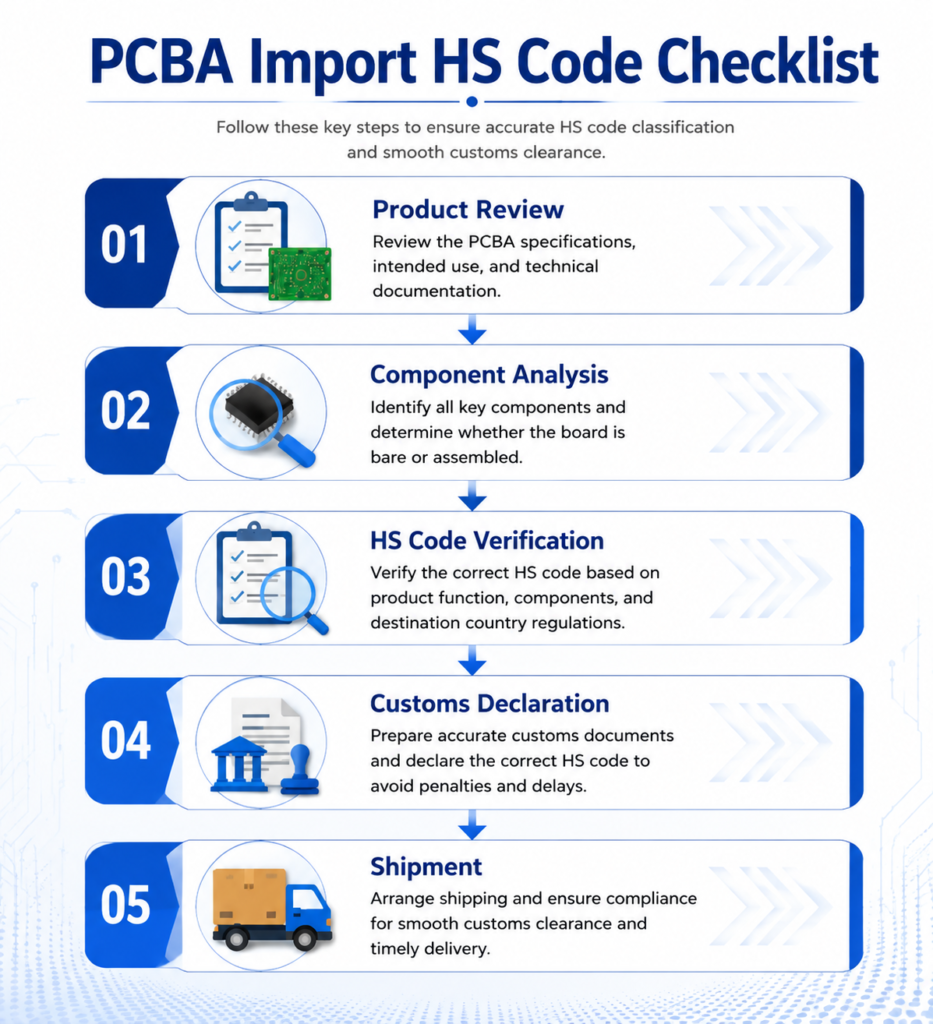
- Step 1: Determine if the board is bare (no components) or assembled.
- Step 2: Identify key components, such as semiconductors or other mounted elements.
- Step 3: Use a reliable HS code lookup tool or compliance software to confirm the correct classification.
Common HS Code Mistakes When Importing PCB Assemblies
| Mistake | Risk |
|---|---|
| Treating PCBA as a bare PCB | Incorrect duty calculation |
| Ignoring the final product function | Customs reclassification |
| Using outdated HS codes | Import delays and compliance issues |
| Missing component information | Incorrect customs declaration |
Common Challenges in PCBA HS Code Classification
- Different Customs Interpretations: HS codes may be interpreted differently across countries, creating classification risks.
- PCB vs PCBA Classification: Many importers confuse bare PCBs with assembled PCBAs, leading to incorrect declarations.
- Changing Product Technology: New components and assembly methods require updated HS code evaluation.
Solutions to Overcome HS Code Challenges
- Leverage HS Code Databases: Use online tools like the World Customs Organization (WCO) database to find the right HS codes based on your product specifications.
- Consult Compliance Experts: If you’re not sure, talk to trade compliance specialists or customs brokers to make sure you’re right.
- Use Compliance Software: Automate your HS code classifications with software that integrates with your product catalog and helps you avoid mistakes.
| Common PCBA HS Code Challenge | How to Solve It |
|---|---|
| Different customs interpretations between countries | Verify HS code requirements with the destination country’s customs regulations |
| Confusion between bare PCB and assembled PCBA | Identify whether the product contains mounted components before classification |
| Using outdated HS code information | Check the latest HS code databases and tariff updates |
| Missing product documentation | Provide BOM, PCB assembly details, and technical specifications |
Frequently Asked Questions (FAQ)
What happens if I use the wrong HS code for PCBA imports?
Using the wrong HS code for PCBA imports can lead to customs delays, incorrect duty calculations, additional inspections, or compliance issues. For international electronics trade, OEM buyers should verify the product structure, components, and final application before selecting an HS classification.
What is the difference between HS Code 8534 and 85389091 for PCB and PCBA?
HS Code 8534 generally applies to bare printed circuit boards without mounted electronic components. HS Code 85389091 may apply to certain assembled electronic parts depending on the product function and customs interpretation.
The correct classification depends on whether the PCB contains components, its intended use, and the importing country's customs requirements.
How do I find the correct HS code for PCBA imports?
To find the correct HS code for PCBA imports, review the complete product information, including PCB structure, assembled components, product function, and technical specifications. OEM buyers should also check updated customs databases or consult an experienced EMS partner before shipment.
Does the HS code change when PCB boards are assembled with components?
Yes, the HS code may change after electronic components are mounted onto PCB boards. A bare PCB and an assembled PCBA are considered different products for customs classification because the added components can affect the product's function and tariff category.
When importing assembled PCBAs from China, buyers should provide accurate BOM information and product descriptions to support correct customs declaration.
Limited Time Offer:
Free HS Code & PCB Assembly Consultation
How Correct HS Code Classification Helps PCBA Imports
Summary: Key Takeaways
Correct HS code classification is essential for companies importing PCB assemblies internationally. Choosing the wrong classification can result in customs delays, incorrect duty calculations, and additional compliance risks.
For OEM companies importing PCB assemblies from China, understanding the difference between bare PCBs and assembled PCBAs is especially important. Accurate product information, BOM details, and technical specifications can help ensure smoother customs clearance.
Working with an experienced EMS partner can further reduce classification risks and improve international supply chain efficiency.
Unit Circuits supports OEM customers worldwide with turnkey PCB assembly services, including component sourcing, PCB assembly, testing, quality inspection, and international shipment coordination.
By combining manufacturing expertise with reliable supply chain management, Unit Circuits helps businesses move electronic products from prototype to production with greater confidence.

Additional PCB Assembly & International Trade Resources:
- PCB Assembly Process Explained: From BOM to Testing – Understand each stage of PCBA manufacturing, from component sourcing and assembly to testing and final inspection.
- PCB Assembly Cost Guide for OEM Projects – Learn what affects PCB assembly costs and how OEM buyers can control manufacturing expenses.
- How to Choose a Reliable EMS Partner in China – Discover key factors for evaluating Chinese EMS suppliers, including quality, certifications, engineering support, and supply chain capability.
- SMT vs SMD: Key Differences Explained – Understand the difference between SMT technology and SMD components used in PCB assembly.
- PCB Components and Electronic Part Numbers Guide – Learn how common PCB components, part numbers, and specifications are identified for sourcing and manufacturing.
Request for Quote
Related PCB Assembly Resourcing Guide

Top 12 PCBA Manufacturers with Turnkey & Global Logistics Services [2025]
Looking for a reliable turnkey PCBA manufacturer in 2025? Discover 12 top providers with global

SMT Factory Audit Checklist (2025): 20 Questions to Evaluate a PCB Assembly Supplier in China
Audit SMT factories in China confidently with this 2026 checklist. Learn 20 essential questions to
RECENT POSTS
Leading PCBA Manufacturer
✅ Assemble 20 PCBAS for $0 ✅ Get $100 OFF – Risk-Free Trial!
✅ 100+ Satisfied Customers
✅ Ensured Quality & On-Time Delivery
✅ Free Trial, No Commitments!