Last Updated: August 13, 2026
What Does SMT Stand For?
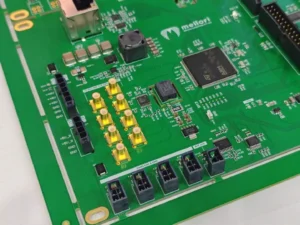
SMT stands for Surface Mount Technology, a method of mounting electronic components directly onto the surface of a printed circuit board (PCB). Unlike through-hole technology, SMT does not require component leads to pass through drilled holes in the PCB.
SMT is widely used in modern electronics manufacturing because it supports smaller components, higher component density, automated assembly, and efficient high-volume production.
What Is Surface Mount Technology?
Quick Leads
How Does the SMT Process Work?
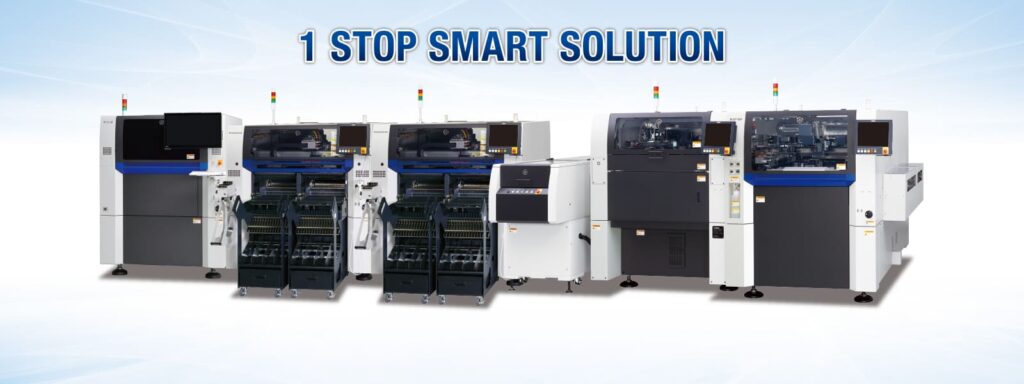
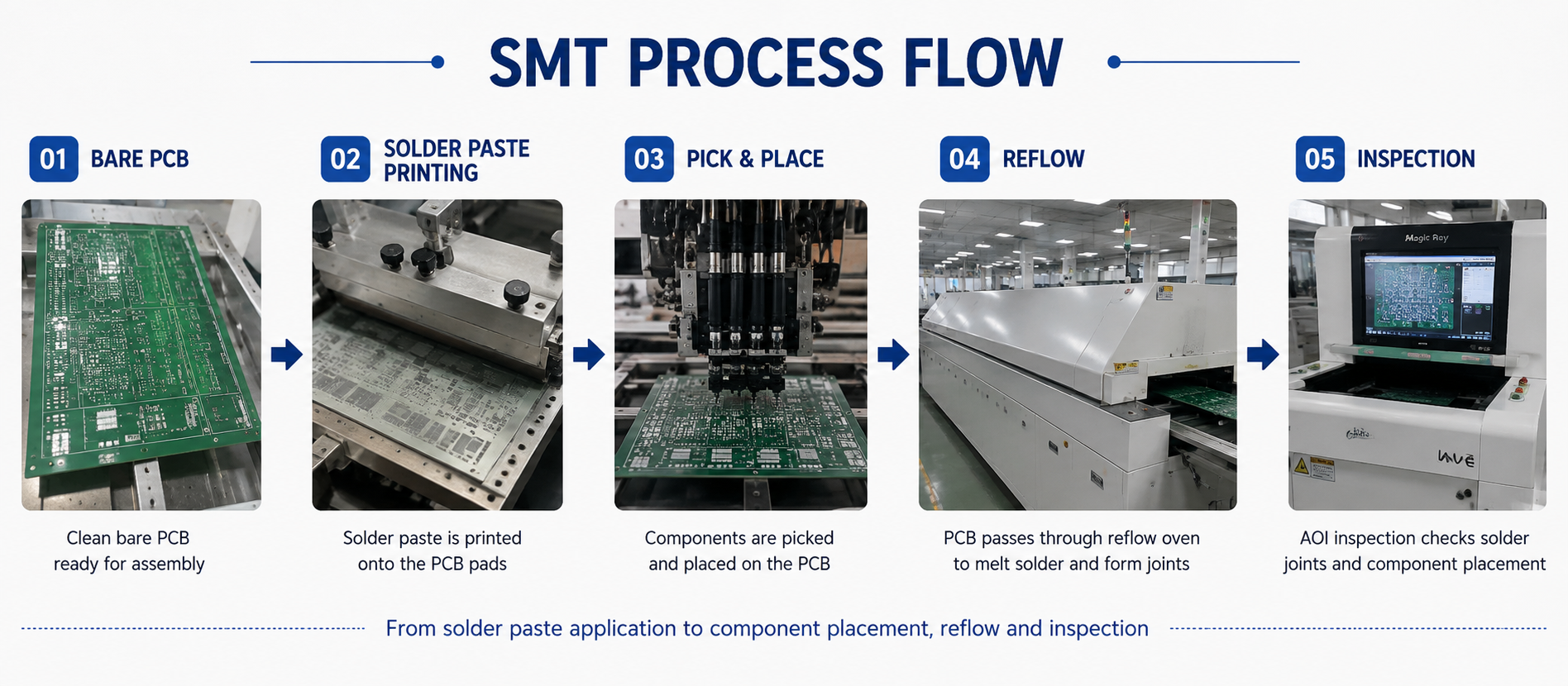
Surface mount technology uses an automated production process to place and solder electronic components onto PCB surface pads. A typical SMT process includes solder paste printing, component placement, reflow soldering, inspection, and testing.
1. Solder Paste Printing: Solder paste is applied to designated PCB pads through a stencil.
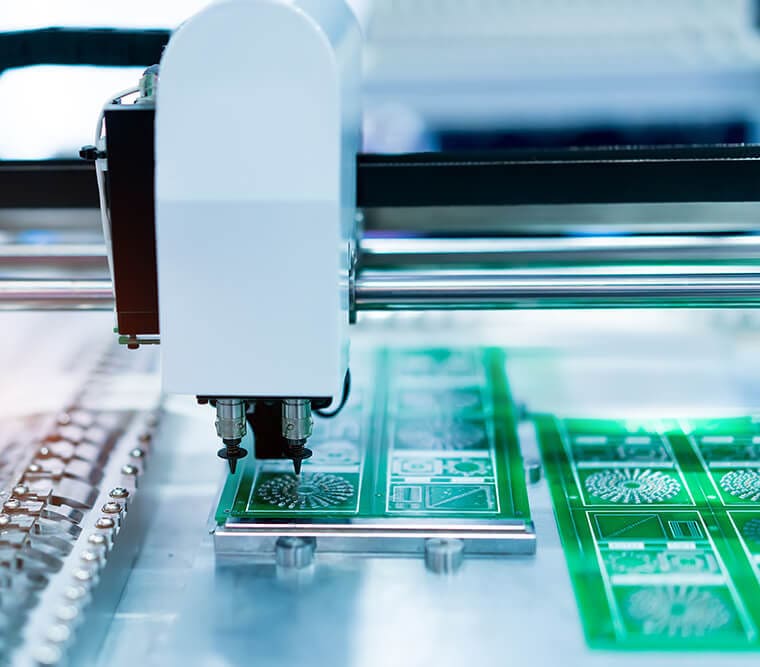
2. Pick and Place: Automated pick-and-place machines position SMD components onto the solder paste.
3. Reflow Soldering: The PCB passes through a controlled reflow oven, where the solder paste melts and forms permanent solder joints.
4. Inspection: AOI is commonly used to check component placement and solder joints. X-ray inspection may be used for components with hidden solder joints, such as BGAs.
5. Testing: Depending on the product requirements, assembled boards may undergo electrical or functional testing before final approval.
For a detailed breakdown of each manufacturing stage, see our SMT assembly process and services.

Advantages of SMT in Electronics Manufacturing
- Miniaturization and High Component Density
SMT supports smaller components and allows components to be mounted on both sides of a PCB, enabling compact, high-density designs.
- Efficient Automated Production
Automated solder paste printing, pick-and-place, and reflow processes can support efficient and repeatable production from prototypes to higher-volume builds.
- Electrical Performance
Shorter component leads and interconnection paths can reduce parasitic inductance and resistance, which can benefit certain high-frequency and high-speed applications.
Applications of SMT Across Industries
- Consumer Electronics: From smartphones to laptops, SMT lets us make high-density circuits, which are important for modern devices.
- Automotive: SMT is a big deal in the automotive industry because it lets us make small and reliable electronic control units (ECUs).
- Telecommunications: High-speed and high-frequency circuits in telecommunications equipment depend a lot on SMT for their performance and reliability.
- Medical Devices: The small size that SMT gives us is really important in making small, life-saving medical devices.
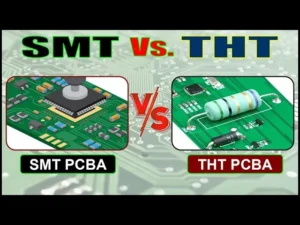
SMT vs. Through-Hole Technology: What’s the Difference?
| Feature | Surface Mount Technology (SMT) | Through-Hole Technology (THT) |
|---|---|---|
| Component Size | Typically smaller, supporting compact PCB designs | Typically larger and requires more board space |
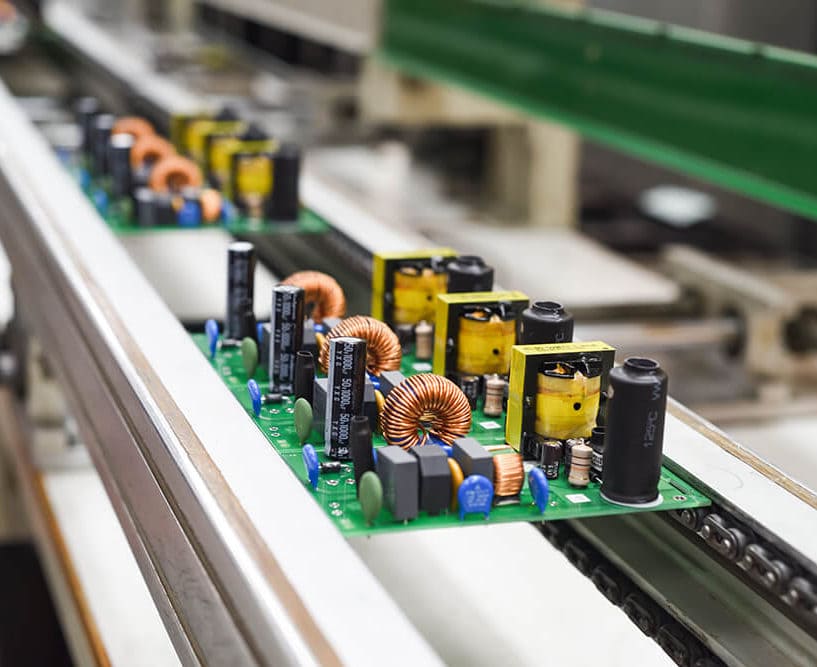
| Component Placement | Can be mounted on one or both sides of the PCB | Leads pass through drilled PCB holes |
| Assembly Process | Highly compatible with automated assembly | Often involves additional insertion and soldering processes |
| Mechanical Strength | Suitable for most compact electronic assemblies | Often preferred where stronger mechanical attachment is required |
| Applications | High-density electronics, control boards, telecom and consumer devices | Connectors, transformers and mechanically stressed components |
| Production Volume | Efficient for prototypes through high-volume automated production | Suitable for applications where through-hole components are technically required |
| Electrical Performance | Short interconnections can reduce parasitic effects | Longer leads may introduce greater parasitic inductance in some applications |
Neither technology is universally better. The right choice depends on component type, PCB density, mechanical requirements, production volume, and product application. Many PCB assemblies use a combination of SMT and through-hole components. Learn more about the differences between SMT and through-hole assembly.
SMT Process Flow: From Solder Paste to Inspection
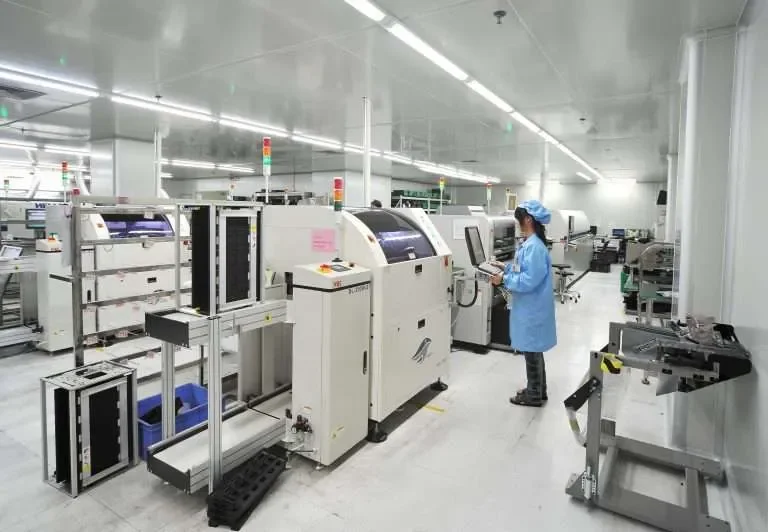
A typical SMT production flow moves from PCB preparation and solder paste printing to automated component placement, reflow soldering, inspection, and testing. Each stage is controlled to ensure accurate component placement and reliable solder joints.
PCB Preparation → Solder Paste Printing → Pick & Place → Reflow Soldering → AOI / X-Ray Inspection → Testing
Need SMT PCB Assembly Support?
sales@unitcircuits.com
Conclusion
Surface Mount Technology (SMT) is a core electronics manufacturing method that enables compact PCB designs, high component density, and automated production. By mounting SMD components directly onto PCB surface pads, SMT supports efficient assembly across applications ranging from industrial controls and telecommunications to automotive and medical electronics.
The choice between SMT and through-hole technology depends on component type, board design, mechanical requirements, and production needs. In many products, both technologies are used on the same PCB assembly.
If you are preparing a PCB project for production, explore our SMT assembly services for PCB fabrication, component sourcing, assembly, inspection, and testing support.
Additional SMT & PCB Assembly Resources:
- Inspection Methods for Printed Circuit Assembly – Learn how AOI, X-ray, ICT, and functional testing are used to identify PCB assembly defects and verify product quality.
- How to Audit an SMT Assembly Factory: A Step-by-Step Guide – Learn what to evaluate when selecting an SMT assembly supplier, including equipment, quality control, certifications, testing, and production capability.
- What Is PCBA? PCB Assembly Explained – Understand what PCBA means, how PCB assembly works, and the key differences between a bare PCB and an assembled circuit board.
- Fiducial Marks in PCB Assembly: What They Are and Why They Matter – Learn how PCB fiducial marks help automated SMT equipment accurately align boards and place components during assembly.
Request for Quote
RELATED POSTS

Why Low MOQ PCB Manufacturing is a Game-Changer for Hardware Startups in 2026
Discover how low MOQ PCB assembly empowers hardware startups in 2026 with fast prototyping, full

How to Prepare Gerber and BOM Files for Error-Free PCB Assembly
Learn how to prepare Gerber and BOM files for fast, error-free PCB assembly. No MOQ,
RECENT POSTS
Leading PCBA Manufacturer
✅ Assemble 20 PCBAS for $0 ✅ Get $100 OFF – Risk-Free Trial!
✅ 100+ Satisfied Customers
✅ Ensured Quality & On-Time Delivery
✅ Free Trial, No Commitments!